All About Japanese Maple Trees
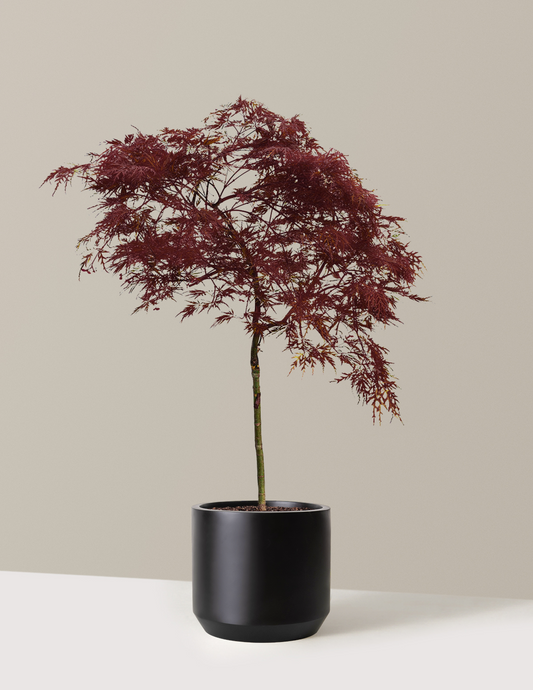
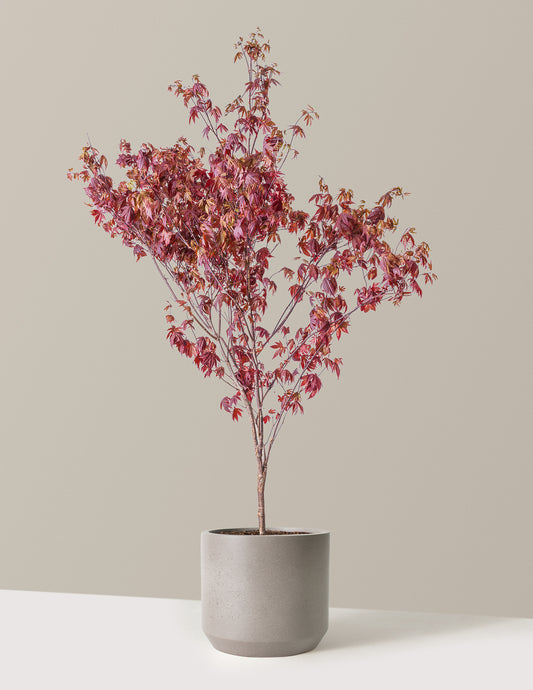
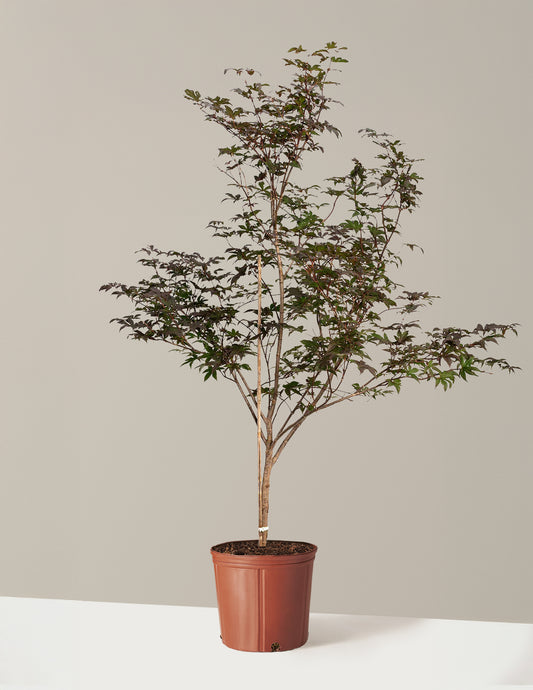
Japanese Maple Trees are among the most celebrated ornamental trees, prized for their deeply lobed foliage, graceful branching, and remarkable seasonal color. Our collection spans some of the most sought-after varieties available, from the deep crimson laceleaf of a Red Dragon or Crimson Queen, to the dramatic upright form of a Bloodgood, to the vivid coral-red bark of Coral Bark. Whether you're working with a container on a patio or a focal point in a garden bed, there's a Japanese Maple here for you.
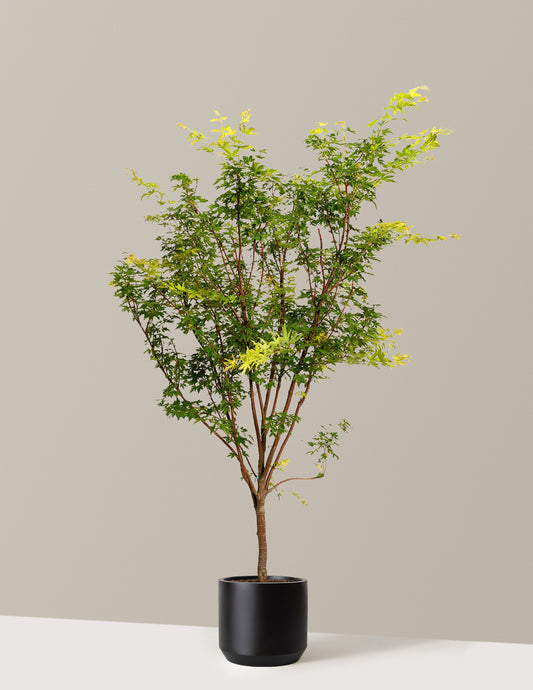
Japanese Maples are deciduous, meaning they drop their leaves in winter, but that's part of the appeal. The branching structure and, in varieties like Coral Bark, the vivid red-coral stems make them as interesting in the colder months as they are in peak foliage season.
Most Japanese Maples in this collection prefer a spot with morning sun and afternoon shade, particularly in warmer climates where harsh afternoon light can scorch the leaves. Coral Bark is notably more sun-tolerant and can handle full sun even in warmer zones. All prefer well-draining, slightly acidic soil and consistent moisture, especially in their first few seasons while establishing.
Growth rate varies by variety: compact weeping forms like Red Dragon and Crimson Queen are slow growers, while upright varieties like Emperor grow faster than most. That range of sizes and growth habits is part of what makes this collection so versatile, whether you're working with a small patio container or a larger garden bed.
What is a Japanese Maple Tree?
Japanese Maple Trees (Acer palmatum) are ornamental deciduous trees native to Japan, Korea, and China, known for their distinctive palmate leaves, elegant form, and exceptional seasonal color. They're widely grown as specimen trees, container plants, and garden focal points.
Where should I plant a Japanese Maple?
Most Japanese Maples do best in a location with morning sun and afternoon shade, especially where summer heat is intense. Coral Bark is notably more sun-tolerant than other varieties and can handle full sun even in warmer zones. All benefit from shelter from harsh winds, which can dry out and damage the foliage.
How do I care for a Japanese Maple in a container?
Container-grown Japanese Maples need consistent watering; the soil should stay evenly moist but never soggy. They'll need repotting every few years as they grow and may require more winter protection than in-ground plantings since roots are more exposed to freezing temperatures. Compact weeping varieties like Red Dragon, Crimson Queen, Tamukeyama, and Waterfall are particularly well-suited to container growing. See how our plant expert Paris pots a large tree in a container.
When do Japanese Maples change color?
Color varies by variety. Red-leafed varieties like Red Dragon, Bloodgood, Crimson Queen, Emperor, and Tamukeyama emerge in spring with deep reds and purples that hold through summer, then turn fiery crimson or scarlet in fall. Coral Bark produces green foliage that shifts to golden yellow in fall, then the coral-red bark becomes the main feature through winter.
Are Japanese Maple Trees pet safe?
Japanese Maple Trees (Acer palmatum) are considered non-toxic to dogs and cats, and are not listed as toxic by the ASPCA.