Common Care Questions
5 Causes For Your Plant’s Yellow Leaves
If you’ve ever seen yellow leaves on your what-was-once-green-plant, read on to find out the causes, symptoms and solutions. It’s going to be fine!
Why Do Leaves Turn Yellow?
Leaves turning yellow on plants can mean different things depending on the variety, and what other symptoms the plant is showing. This is because plants can show similar signs of stress for different reasons including overwatering, underwatering, mineral deficiency, temperature stress, and so on. Identifying the specific symptoms your plant is showing can help you determine the cause and take appropriate action. When assessing, look at the whole plant, the environment, and the soil to accurately diagnose the cause of yellowing.
Below, we go into the solution to get rid of yellowing leaves by first identifying the symptoms displayed by the plant which can help pinpoint the cause.
Leaves that are Yellow, Curling, and Drooping
If you notice your plant has yellow leaves that are curling inwards and the soil is dried out or pulling away from the edges, it's likely under-watered. You might also see older leaves falling off, or brown leaf edges when a plant is dehydrated because it prioritizes survival by shedding leaves, starting with the older ones. To fix this, the solution is to water your plant to evenly and thoroughly saturate the soil. Some plants may perk back up within a few hours after watering, while others may require a few days.
Upon watering, if you notice the water is pooling at the top of the planter or escaping the drainage holes quickly, there's a chance your soil is compacted which makes it harder to saturate. To aerate the soil, gently poke holes in the soil using a stick, chopstick, or skewer, ensuring you don’t damage the roots. This helps improve air circulation and allows water to penetrate more evenly!

Leaves Turning Bright Yellow or Mushy Stems
Are the leaves turning bright yellow and is the soil wet and muddy? You might even notice blackened stem bases or fungus gnats. This is usually a sign of overwatering, either caused by watering your plant before it's ready or if your plant is in too low of light. When plants sit in waterlogged soil, their roots can’t get enough oxygen, leading to root damage which manifests as yellow leaves.
You can correct this by letting the soil dry out more in between waterings. If overwatering is contributed by lack of light, reassess your lighting and your plants placement to make sure it's getting the light it needs. Repotting the plant in dry soil is a last resort if you fear the plant has root rot.
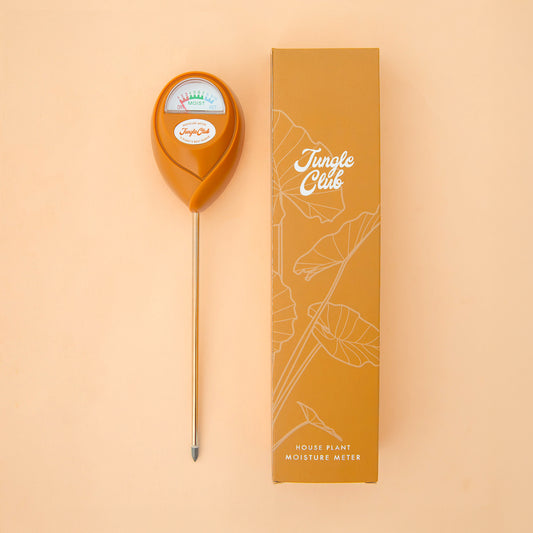
Not sure when to water your plant? Try using a moisture meter.
Irregular Yellow Spots or Leaf Deformities
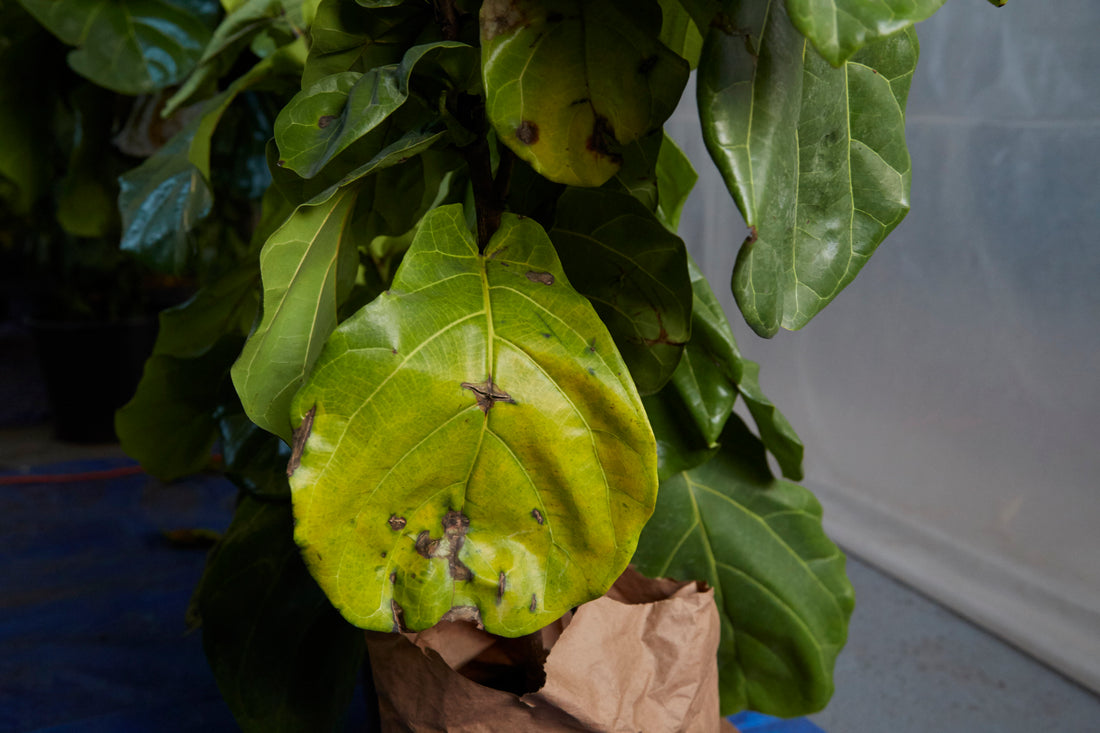
Irregular yellow leaf spots with potential leaf deformities is usually caused either by a pest or a leaf spot disease. If no pests are visible, then this is likely caused by an infection. Leaf spot disease on houseplants is typically caused by fungal or bacterial pathogens that thrive in warm, humid conditions. Overwatering, poor air circulation, and wet foliage can promote the growth of these pathogens.
To treat leaf spot, remove and dispose of affected leaves, keep the leaves dry, and improve air circulation around the plant. You can also apply a fungicide which won't cure already infected leaves, but will prevent the infection from spreading on the rest of the plant.

Whole Plant Yellowing or Semi-Yellowing
A “general malaise” of a plant turning yellow (leaves may or may not drop) means that it’s either pot-bound—the roots have no room to expand—or your plant is in the early stages of a nutrient deficiency, usually nitrogen or iron.
The solution is to repot to a bigger pot and provide fresh potting soil which contains nutrients and organic matter. If you find your plant still has room to grow in its current planter you can fertilize your plant instead to replenish its supply of nutrients.
On the other hand, the yellowing could be contributed by a temperature issue — it’s either too cold or too hot for your plant where it is placed. This will usually be a more pale yellow or whitish yellow. Temperatures would either be fluctuating around the plant too much or contributed by a draft, like a radiator, AC, or open window during extreme temperatures.

Only Mature Leaves are Turning Yellow
As plants mature and grow, older leaves can age-out, start to yellow, and eventually fall from your plant. This is natural leaf shedding. If your plant is happy and healthy otherwise, and only older, mature leaves are yellowing and dropping, there is no need to worry!
Conclusion
Identifying the cause of yellowing leaves requires careful observation and sometimes a bit of trial and error. By considering factors such as watering habits, light exposure, and nutrient levels, you can often diagnose and correct the issue, helping your plants return to their healthy, green state. Regular monitoring and timely interventions are key to preventing and managing yellowing leaves.
Perfect Pairings For Your Plants
-
-
-
New Arrival
-
-
-
-
Best Seller
-
-
-
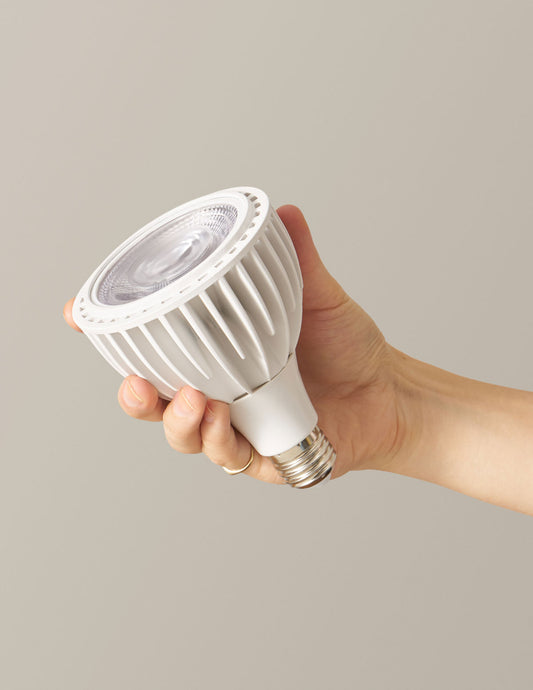
Soltech Solutions
Vita Grow Light Bulb
LED grow bulb that supports the growth of your plantsFrom $85












Words By The Sill
Empowering all people to be plant people—a collection of articles from The Sill's team of plant experts across a variety of plant care topics to inspire confidence in the next generation of plant parents. Welcome to Plant Parenthood™.
Do Some Plant Shopping